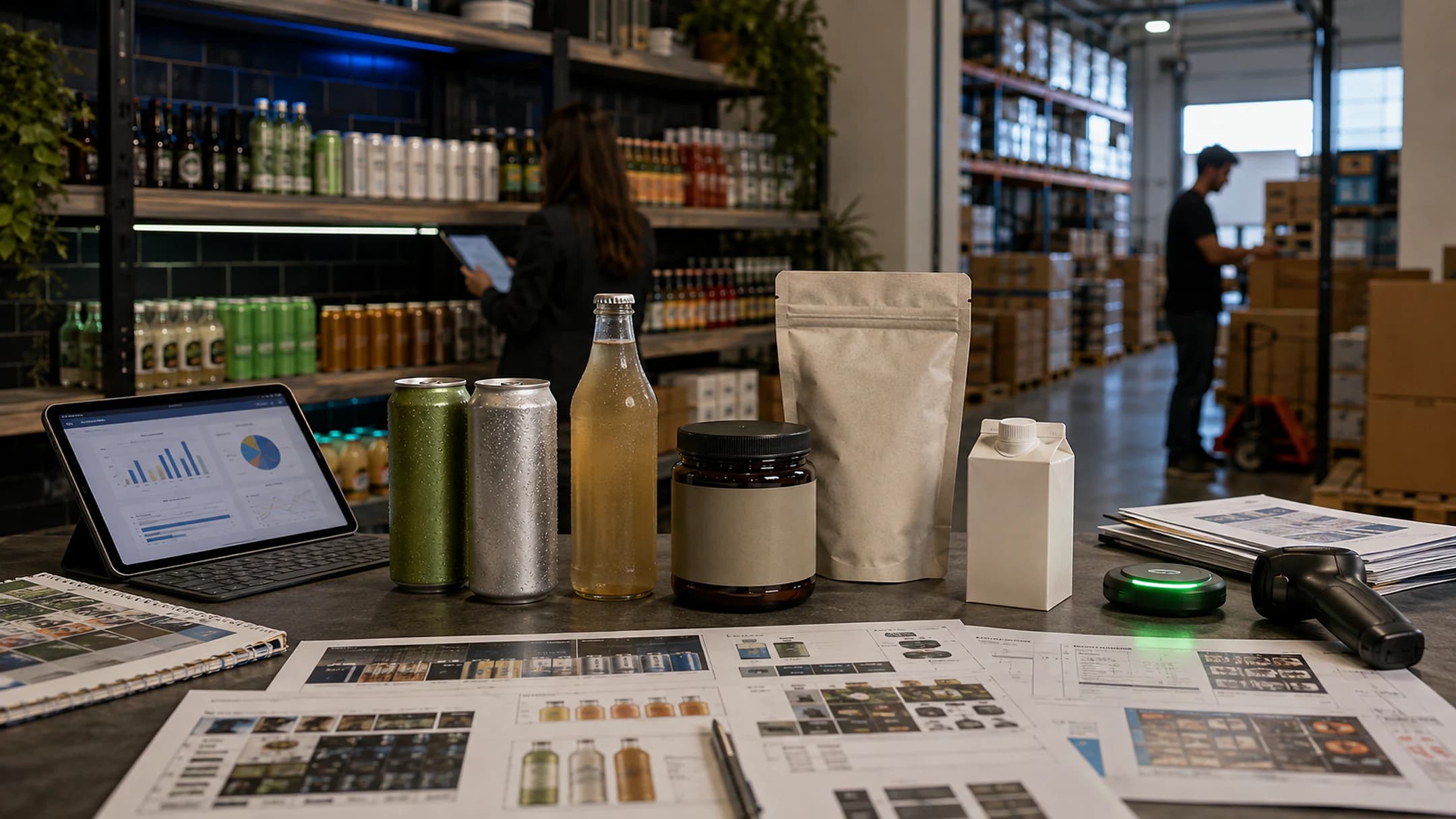
The 2026 CPG Growth Reset: How Emerging Brands Win—and Keep—More Retail Doors
A practical market brief for CPG, RTD beverage, and supplement founders on retail-door strategy, market identity, buyer readiness, velocity, and AI-assisted sales execution.
White Lion Labs — our own brand, disclosed as own-brand operating experience and not client proof.
In this article
- The market is open—but it is not forgiving
- Growth starts with a sharper market identity
- New doors require a door strategy—not a giant list
- The buyer meeting is a strategy test
- Placement is the beginning; velocity earns the future
- AI should increase sales capacity—not manufacture credibility
- A practical 90-day CPG growth agenda
- The growth advantage is a connected system
The conversations emerging CPG founders are having in 2026 sound remarkably consistent. The product is real. Early consumers respond. A few doors may already be open. But the path from promising brand to repeatable retail growth is still unclear. Founders need sharper positioning, a credible plan for new accounts, better buyer materials, and a sales process that does not disappear into spreadsheets and inboxes.
That is why the next stage is not simply ‘find a broker’ or ‘send more emails.’ The market now rewards brands that can connect identity, distribution, digital discovery, sell-through, and account-level execution. For RTD beverage, food, wellness, and supplement brands, growth strategy has become an operating discipline.
The market is open—but it is not forgiving
NielsenIQ reported that established niche brands gained 1.5 percentage points of U.S. market share from 2022 through 2025 while large and mid-sized national brands declined by 2.1 points. That is a meaningful opening for challengers, especially in health and wellness. At the same time, Circana reported U.S. retail food and beverage growth of 2.2% in the first half of 2026, with slower 2%–3% growth projected for 2027. Opportunity and pressure are arriving together.
Private brands are also stronger competitors. FMI says 92% of U.S. grocery shoppers now have store-brand products at home, and private-brand dollar sales rose 2.8% year over year. An emerging brand therefore cannot rely on novelty alone. It has to give the shopper and the retailer a reason to choose it over trusted store brands, established labels, and a crowded set of other challengers.
Growth starts with a sharper market identity
A buyer-ready market identity is more than a logo, color palette, or founder story. It makes the commercial case easy to understand. Who is the product for? Which need, occasion, or tradeoff does it address? What category role does it play? Why will a shopper notice, believe, try, and buy it again? Why does the answer matter to this retailer and its customers?
Economic pressure is splitting shoppers between value-seeking and selective premium behavior. This makes vague ‘premium wellness’ positioning especially weak. An RTD or supplement brand needs to be specific about the consumer, benefit, taste or experience, usage occasion, proof, and price-value relationship. Strong identity gives sales, packaging, content, retail media, and product pages the same strategic center.
- A clear consumer and need state—not an audience described as everyone who wants to be healthier
- A defensible difference the shopper can recognize quickly
- A category and shelf story that makes sense to the buyer
- Claims and proof that are accurate, supportable, and consistent across channels
- A price, pack, and margin story aligned with the intended account
- A concise reason the brand belongs in this retailer now
New doors require a door strategy—not a giant list
One of the most expensive mistakes in CPG sales is treating every retailer as equally valuable. A long database can create the appearance of a pipeline while hiding weak fit. Better strategy begins below the national-market average: at the retailer, format, region, store cluster, and shopper level. NIQ’s current work on store-level precision reflects the same shift.
For an emerging RTD or supplement brand, the right first doors are often those where the consumer profile, merchandising environment, price tolerance, category set, and founder’s ability to support the launch align. A regional account with strong fit and visible velocity can be more valuable than a premature national win that strains inventory and underperforms.
- Define the account thesis: why this product, for this retailer, in these stores
- Score the opportunity by fit, economics, timing, operational readiness, and support requirements
- Research the category, assortment, buyer priorities, reset calendar, and relevant proof
- Tailor the sell sheet, deck, sample, and outreach narrative to the account
- Enter every contact, meeting, sample, objection, and next action into one owned pipeline
- Plan activation and measurement before the first purchase order arrives
The buyer meeting is a strategy test
A strong buyer conversation shows that the founder understands more than the product. The brand should be ready to discuss the consumer, category role, current performance, pricing and margins, supply capacity, merchandising, promotion, launch support, and what success will look like in the first stores. The objective is not to recite a deck; it is to reduce uncertainty around the decision.
This is where consulting and sales execution need to stay connected. Strategy without active buyer feedback becomes theoretical. Outreach without strategy becomes generic. Every meeting should improve the account thesis, materials, objection handling, and next round of targeting—even when the answer is no.
Placement is the beginning; velocity earns the future
Retail access creates potential, not durable distribution. NIQ’s 2026 analysis identifies early distribution and velocity as the strongest predictors of whether an innovation survives into year two. The work after authorization therefore matters as much as the pitch: product availability, digital shelf quality, store-level awareness, demos or creator support where appropriate, reviews, account communication, and early course correction.
The digital shelf now influences in-store decisions too. Consumers check product attributes, reviews, price, availability, and social proof across retailer sites, search, social platforms, and AI assistants. A brand entering physical retail with incomplete product data, weak imagery, inconsistent claims, or no discovery strategy is asking the shelf to do too much alone.
AI should increase sales capacity—not manufacture credibility
AI is already changing CPG discovery and operations. NIQ reports that 74% of shoppers use AI for some form of product discovery, including 54% for research. Emerging brands can also use AI internally to perform better account research, organize market information, prepare meetings, personalize approved outreach, adapt content, summarize calls, and identify stalled follow-up.
The boundary is important. AI should not invent a buyer relationship, retailer requirement, consumer claim, performance statistic, or personalized detail. It should help a capable sales operator move faster while preserving human judgment, accuracy, and the founder’s authentic voice. The relationship remains human; the preparation and operating system become more intelligent.
- Account research briefs built from verified public and internal information
- Buyer-specific first drafts reviewed by a knowledgeable person
- Meeting agendas, objection preparation, and follow-up summaries
- CRM updates and reminders created from approved conversation notes
- Digital shelf and content adaptation from a controlled source of truth
- Pipeline analysis that surfaces stalled samples, overdue next steps, and account patterns
A practical 90-day CPG growth agenda
Days 1–30: sharpen the growth thesis
Clarify the consumer, category role, differentiation, account economics, current proof, supply constraints, and growth goal. Audit the deck, sell sheet, product pages, samples, CRM, retailer list, and follow-up habits. Select a small number of account types with a credible fit.
Days 31–60: build and operate the sales system
Create the account tiers, buyer story, materials, research workflow, outreach sequences, meeting preparation, sample tracking, and CRM stages. Begin focused conversations. Capture objections and questions as strategy data rather than letting them disappear in individual inboxes.
Days 61–90: improve from market evidence
Review response, meetings, samples, follow-up movement, buyer feedback, and any active-door performance. Refine the account thesis and materials. Build the launch and digital-shelf plan for likely wins. Decide which targets to deepen, pause, or replace based on evidence—not activity volume.
The growth advantage is a connected system
The brands most likely to compound are not necessarily those with the biggest contact list or loudest campaign. They connect a recognizable market identity to disciplined account selection, strong buyer conversations, visible follow-up, launch support, digital discovery, and performance evidence. Each part improves the next.
Related services
Build the market identity, retail-door plan, sales materials, pipeline, and AI-assisted execution system.
Supplement growth systemsConnect retail and DTC growth in an operating system the brand owns.
CRM follow-up automationKeep buyer contacts, samples, next steps, launches, and reorders visible.
Sources and further reading
Apply this to your brand
The $497 CPG Growth Systems Audit reviews market identity, target retail doors, buyer materials, outreach and the sample-to-reorder pipeline — and the fee is credited toward implementation.