The Hot CPG Products for Winter 2026–27
A founder-and-buyer forecast for Winter 2026–27: protein-plus-fiber, cottage cheese, energy, electrolytes, smaller packs, and a drier January — ranked by evidence, not hype.

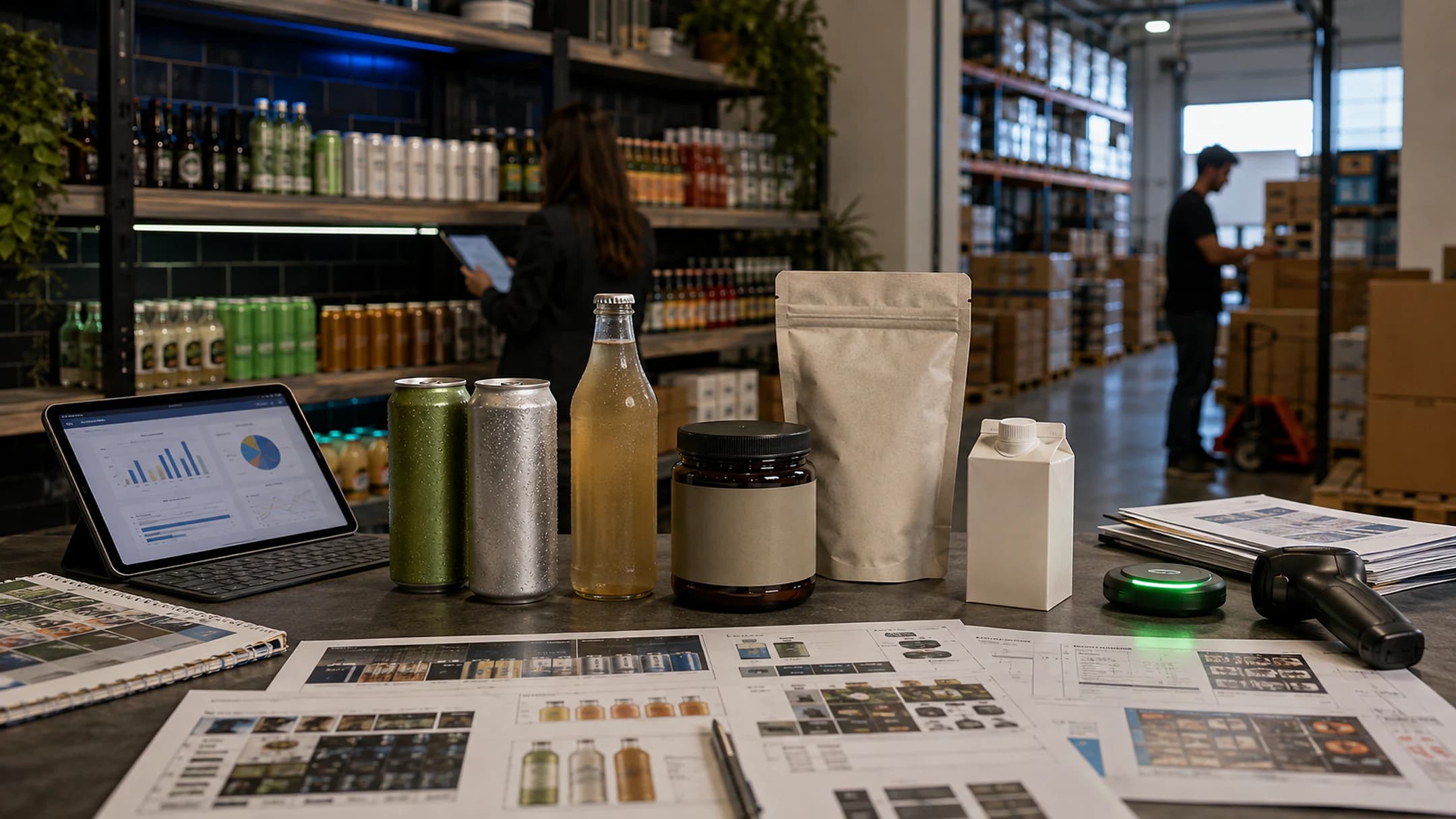
Original AI-assisted editorial image by Otonomaxx
Direct answer
The decision in one minute.
Circana reports US retail food and beverage grew 2.2% in the first half of 2026 with volume flat. Circana finds 48% of adults seeking more protein, up 7 points, while adults eat less than half the recommended fiber. Cottage cheese reached just shy of $2.1 billion, up 19% in dollars and 14% in units, and shelf-stable non-aseptic energy drinks reached about $27.8 billion.
Key takeaways
- Circana finds 48% of US adults seeking more protein, up 7 points from last year, while adults eat nearly double the recommended protein and less than half the recommended fiber.
- Cottage cheese reached just shy of $2.1 billion, up 19% in dollars and 14% in units. Shelf-stable non-aseptic energy drinks reached about $27.8 billion, with units up 12%.
- Circana reports GLP-1s are the second-most common US diet type, used by 8.5% of adults, up from 4.8%, with 65% of those users seeking more protein.
- AlixPartners finds 47% of consumers plan to start holiday shopping before Halloween. Deloitte forecasts $1.70 trillion to $1.71 trillion in holiday retail sales for November 2026 through January 2027, up 4.0% to 4.8%.
- An NIQ/CGA on-premise survey of 1,600 legal-age consumers in Texas, New York, Florida, and California found soft drinks (57%) and hot or iced drinks (41%) as leading alcohol substitutes for Dry January 2026.
In this article
Circana reports US retail food and beverage grew 2.2% in the first half of 2026, with volume flat and price/mix up 2.3%.
Our read: seasonal novelties will not win this winter. When units are flat, facings go to durable needs — protein, fiber, smaller meals, energy, hydration — and to a drink that can host in December and reset in January. This is a barbell winter with a smaller plate at the center. The two commercial moments of winter sit closer together than the calendar suggests, so one formula should carry both.
Circana reports GLP-1s are the second-most common US diet type, used by 8.5% of adults, up from 4.8%, with 65% of those users seeking more protein.
Gallup data cited by The Food Institute put weight-loss GLP-1 use at 11% of American adults, up from 3% in 2024.
The winter market
Circana data reported by Chain Drug Review show retail food and beverage dollars up 0.2% and unit demand down 1.8% in the four weeks ending August 29, 2026.
Circana told a mid-2026 webinar that 2026 SNAP policy changes cut roughly 2 million SNAP households and about $10 billion of EBT spending versus 2025, per Dairy Reporter.
PLMA, using Circana data, reported store-brand unit sales rose 0.2% over the six months ending June 14 while national-brand units fell 0.5%, lifting store-brand unit share to a record 23.8%.
AlixPartners finds even high-income households are spending over 50% more on private label than in 2019.
Our read: that is nominal spend across inflationary years, not a real-terms jump, but it tells you where trade-down is heading.
NIQ and World Data Lab find the more than $1.1 trillion US FMCG market polarizing, with growth in premium and value while the mainstream loses share, and NIQ says private labels now compete at both ends.
Deloitte forecasts holiday retail sales of $1.70 trillion to $1.71 trillion for November 2026 through January 2027, up 4.0% to 4.8%.
Deloitte also forecasts e-commerce of $316.1 billion to $318.9 billion, growing 7.5% to 8.4%.
AlixPartners finds 57% of consumers say the economy is worse than a year ago and 37% intend to spend less this holiday, while Census spending has averaged roughly 5% above prior-year levels each month of 2026.
NRF forecasts retail sales in 2026 will grow 4.4% over 2025 to $5.6 trillion — a calendar-year figure, not a holiday forecast.
How we ranked the list
We ranked by evidence strength times commercial relevance: scanner dollars and units first, then platform share, then search, then a trend list. Our read: rank your own winter pipeline the same way. A scanner print buys a facing, platform share buys a test, and a trend list buys a slide — nothing more.
| Product | Evidence signal | Best winter window | Founder move |
|---|---|---|---|
| Protein + fiber foods | Circana: 48% of adults seeking more protein, up 7 points | Oct–Feb | Print both grams on a comfort SKU |
| Cottage cheese | Circana in Dairy Foods: just under $2.1B, +19% dollars, +14% units over 52 weeks to Feb. 22, 2026 | Oct–Jan | Single-serve cups, not another tub |
| Energy drinks | Circana: about $27.8B; dollars +15%, units +12% | Oct–Feb | Win a daypart |
| Product | Evidence signal | Our caveat | Best winter window |
|---|---|---|---|
| GLP-1 mini-meals | Circana: 8.5% of adults, up from 4.8%; 65% seeking more protein | Self-reported survey, not pharmacy claims | Nov–Feb |
| Hydration / electrolytes | SPINS: +28.9% to about $1.7B, trailing year | Reported March 2026 | Oct–Feb |
| NA / moderation drinks | NIQ: NA beer, wine and spirits +18.5% to $1.01B in 2025. Numerator: January alcohol share 46% (2022) to 41% (2025) | Levels vary by source | Nov; January reset |
| Product | Evidence signal | Our caveat | Best winter window |
|---|---|---|---|
| Creatine | SPINS: +17.2% in supplement dollars. CPG Radar: 253,000 monthly searches, +155.5% YoY | Search is not sales | Jan–Feb |
| Small packs / mini meals | Kroger (January 2026): one-bite snacks, mini meals. Circana: 86% of occasions from home | A format, not a category | Nov–Jan |
| THC beverages | NielsenIQ via CNBC: $239M measured US retail, +135%, 52 weeks through April 2026 | Confirm rules first | Not a 2027 bet |
Our read: the signals point to one brief and one price ladder. The brief is a finishable comfort portion with both grams on the front, no medical language, and a format for a smaller appetite.
Store-brand unit share hit a record 23.8%, growth is concentrating in premium and value, and high-income households spend over 50% more on private label than in 2019.
Our read: the ladder has no safe middle. Build a premium hero with a real reason to exist, or a value multipack — not a mid-priced “better” version of a national brand.
Our read: the holiday build is a warehouse deadline, and the resolution season is a reset of a formula you already sell, not a new launch.
Nine winter bets
1. Protein-plus-fiber foods — strong
Circana’s 2026 Eating Patterns in America finds 48% of US adults seeking more protein, up 7 points and second only to vegetables. The same study says adults consume nearly double the recommended protein each day but less than half the recommended fiber.
Instacart data point the same way. In H1 2026, eight of the ten categories that gained the most share of items sold on the platform were high in protein or fiber, and protein drinks rose 15%, protein bars 9% and cottage cheese 10% in share of items sold.
Instacart searches containing “protein” rose 12.7% year over year in H1 2026, while “fiber” jumped 26.4% from a smaller base. Those are platform measures, not US scanner sales.
Kroger’s January 2026 trend forecast said protein will find its perfect pair with fiber in craveable, comforting formats, from cheesy chickpea pasta to whey-packed oat snacks.
“Nearly half of adults (48%) are seeking more protein in their diets, up 7 points from last year, placing it second only to vegetables among the items Americans want more of.”
— Circana
Our read: the bar aisle is already won, so the open lane is familiar comfort food in a smaller portion that carries both grams — a cocoa, a cup, a mini meal — where the shopper changes the pack, not the habit. When the appetite shrinks and fiber is the gap, a purpose-built mini meal beats a bigger bar. Kroger’s cue is a merchandising signal, not a scanner print.
- Founder move: both grams on the front of pack in a format people already eat — single-serve plus a small-count multipack.
- Buyer angle: one facing covers protein, fiber and smaller-appetite shoppers.
- Risk: a medicinal fiber dump stalls even when the gram counts look right.
2. Cottage cheese and high-protein dairy — strong
Circana data in Dairy Foods show US cottage cheese dollar sales reached just shy of $2.1 billion in the 52 weeks ending February 22, 2026, up 19% year over year, with units up 14% to 635 million.
Instacart’s cottage cheese share of items sold was up 10% in H1 2026.
Our read: the cleanest scanner print on the list, and the winter move is single-serve cups and flavor extensions, not another tub.
3. Energy drinks — strong
Circana data cited by Beverage Industry show shelf-stable non-aseptic energy drinks at approximately $27.8 billion in the latest 52 weeks as of mid-2026, with dollars up 15% and units up 12%.
In Q1 2026, Circana’s Sally Lyons Wyatt said energy drinks were 37.8% of c-store non-alcohol beverage sales and drove nearly all year-to-date growth in that set, on data through March 29.
Our read: win a daypart or a winter flavor LTO. A me-too can is a slotting fee with a code date.
4. GLP-1 companion mini-meals — strong
eMarketer, citing PwC, reported households with a GLP-1 user cut grocery spending 5.5% after six to eight months on the drug. Citing McKinsey, it reported cuts of 11.5% in chips and savory snacks, 8.5% in sweet bakery and 7% in cookies within six months.
Circana shows frozen dinners and entrées now account for close to 5% of in-home occasions, up from less than 1% in the 1980s. That is a level, not a 2026 growth rate.
Our read: treat the GLP-1 basket as a smaller-plate version of the same comfort food, not a new medical aisle. Sell portion control, not a diet, and carry no claim risk. That GLP-1 share is self-reported, not pharmacy claims.
5. Hydration and electrolyte supplements — strong, early-2026 vintage
Hydration and electrolyte supplements grew 28.9% to about $1.7 billion in sales over the last year, according to SPINS data reported in March 2026.
Our read: the closest winter wellness play that is still a beverage. Disclose the dose on the label.
6. Non-alcoholic and moderation drinks — strong, with caveats
NIQ data reported by BeverageDaily show US non-alcoholic beer, wine and spirits sales rose 18.5% year over year in 2025 to reach $1.01 billion.
NIQ off-premise data excluding ready-to-drink options show beer and cider dollars down 3.3%, spirits down 4.1% and wine down 6.1% in the 52 weeks ending January 3, 2026.
Numerator finds alcohol’s share of total beverage sales fell from 46% in January 2022 to 41% in January 2025.
NIQ/CGA found four in ten US on-premise consumers said they were very or somewhat likely to take part in Dry January 2026, led by Gen Z at 50% and Millennials at 49%. The survey covered 1,600 legal-age consumers in Texas, New York, Florida and California, with fieldwork December 3–5, 2025; participants named soft drinks (57%) and hot or iced drinks (41%) as the leading substitutes.
For NA beer specifically, US on-premise January value velocity rose 65% year over year in January 2025 — one month, on-premise velocity, not total US NA-beer retail.
Imbibe’s 2027 flavor forecast says contrast — sweet, heat, salt and acid layered — is becoming a defining strategy. McCormick named black currant its 2026 Flavor of the Year in late 2025.
Our read: run one family of drinks through two jobs. In December it hosts; in January it sits beside soda and hot drinks, where intending abstainers say they go. Make a new consumer learn a new taste in January and you fund education; sit beside cola and cocoa and you rent demand that already exists. Flavor language is where to spend LTO risk, not category demand.
7. Creatine — moderate-strong
SPINS ranks creatine among the top functional supplement ingredients by dollar sales, up 17.2% in the trailing year to early 2026.
CPG Radar data reported by NutraIngredients-USA show creatine drawing 253,000 monthly US searches, growing 155.5% year over year in a women’s-supplement set.
Puori reported 63% of its US customers surveyed in Q2 2026 who had bought Creatine+ in the previous six months were women — a brand survey, not category share.
Our read: creatine is a label-and-dose problem, not an awareness problem. Put the grams on the pack, keep claims to strength and daily performance, skip the clinical overclaim. Search is not sales.
8. Small packs and mini meals — moderate (a format, not a category)
Circana’s research shows 86% of all food occasions are sourced from home, well above pre-pandemic norms.
Kroger’s January 2026 forecast said grazing will go mainstream in 2026, with one-bite snacks and mini meals leading as customers seek portion control and personalization.
A revenue-growth-management practitioner quoted by FoodNavigator argues small formats work with small indulgence, where that is clearly part of the value proposition.
Our read: pick the formula first, then sell two sizes — a single-serve for the afternoon and after-dinner slot, a small-count multipack for weeknights. A purpose-built small format reads as permission; the same box shrunk without a reason reads as shrinkflation.
9. THC beverages — watch
THC beverages generated $239 million in measured US retail sales in the 52 weeks through April 2026, up 135% year over year, per NielsenIQ via CNBC. That is not the full convenience and smoke-shop universe.
Our read: confirm current federal and state rules before committing inventory, and treat the fourth quarter as a compliance and sell-through problem, not a next-year bet.
Hype to watch
SPINS shows magnesium up 33.5% by dollar sales in the trailing year to early 2026, alongside ashwagandha up 26.5% and mushrooms up 19.1%.
CPG Radar’s women’s-supplement dataset, reported in May 2026, shows magnesium search contracting, along with collagen and maca.
Our read: read those two prints as a watch, not a contradiction. An RTD calm drink is an inference from two datasets, not a beverage scan. Ideas we are not betting on this winter: colostrum, clear protein soda and matcha. None has a dollar series in this evidence set, and a vendor search ranking is not a sales print.
What is cooling
NIQ reports peak-season cold and flu sales reached $6.36 billion in 2026, down 3.6%, with cough down 12.5%, sinus 10.1% and cold/flu products 6.1%.
FDA’s vaccines advisory committee met on March 12, 2026 to recommend influenza viruses for 2026–2027 US vaccines, and FDA anticipates an adequate and diverse vaccine supply.
Our read: do not build the winter plan on a brutal treatment season. The treatment declines ran deeper than the category, so the more reliable dollars sit in everyday hydration and wellness facings, not a cough-and-cold dump bin.
Timeline: October, hosting, then reset
AlixPartners finds 47% of consumers plan to start shopping before Halloween, versus 43% last year, and 15% were already shopping in August. Deloitte’s window runs November 2026 through January 2027.
Our read: if the winter LTO is not in the warehouse in October, you are late; if January is a new launch rather than a reset, you are paying twice.
- October: lock one protein-plus-fiber hero and one cottage-cheese flavor extension. Get energy and hydration into winter sets. Ship the holiday drink LTO. Confirm rules if THC is your lane.
- November–December: hosting is the job. Merchandise NA drinks next to the party set. Keep small packs in impulse. Do not build a treatment dump bin.
- January–February: reset the same functional drinks for Dry January, beside soda and hot drinks. Put creatine and electrolytes on the wellness endcap. Cut the holiday LTO. Do not launch a colostrum or matcha hero on January hype.
Otonomaxx helps emerging CPG, RTD and supplement brands turn evidence like this into a SKU plan and a buyer story that ships in time for the winter set.
Practical answers
Frequently asked questions
What CPG products are actually hot for Winter 2026–27?
Circana reported US retail food and beverage grew 2.2% in the first half of 2026 with volume flat. Cottage cheese reached just shy of $2.1 billion, up 19% in dollars and 14% in units. Shelf-stable non-aseptic energy drinks reached about $27.8 billion, with units up 12%. Hydration and electrolyte supplements grew 28.9% to about $1.7 billion over the last year.
Is protein still the winter play, or has fiber taken over?
Circana’s 2026 Eating Patterns work finds 48% of US adults seeking more protein, up 7 points year over year, while adults already eat nearly double the recommended protein and less than half the recommended fiber. On Instacart, the share of searches containing “fiber” rose 26.4% in H1 2026 versus 12.7% for “protein,” from a smaller base.
Should a founder or buyer stock THC beverages this winter?
NielsenIQ, via CNBC, put THC beverages at $239 million in measured US retail sales in the 52 weeks through April 2026, up 135% year over year. Measured retail is not the full convenience and smoke-shop universe. Confirm current federal and state rules before committing inventory. If you already sell the category, treat the fourth quarter as a compliance and sell-through problem.
How should Dry January change a winter beverage plan?
Numerator finds alcohol’s share of total beverage sales fell from 46% in January 2022 to 41% in January 2025. NIQ/CGA’s December 3–5, 2025 on-premise survey of 1,600 legal-age consumers in Texas, New York, Florida, and California found that people likely to take part in Dry January 2026 cited soft drinks (57%) and hot or iced drinks (41%) as leading alcohol substitutes.
When do winter CPG products need to be on shelf?
AlixPartners finds 47% of consumers plan to start shopping before Halloween, compared to 43% last year, and 15% were already shopping in August. Deloitte forecasts holiday retail sales of $1.70 trillion to $1.71 trillion during the November 2026 through January 2027 period, an increase of 4.0% to 4.8%.
Related services
Turn a winter SKU thesis into a buyer story, pack plan, and door-by-door launch.
Supplement growth systemsConnect creatine, hydration, and wellness SKUs to retail and DTC without overclaiming.
Growth auditA focused read on which winter bets your current line can actually support.
Sources and further reading
- Circana: Protein and Convenience in America’s Eating Patterns (Aug 19, 2026) ↗
- Circana: 2026/2027 Global Food and Beverage Outlook ↗
- Deloitte: Holiday Retail Sales Forecast, Nov 2026–Jan 2027 ↗
- AlixPartners: 2026 U.S. Retail Holiday Outlook ↗
- Instacart: The Macro Moment — Protein and Fiber ↗
- Dairy Foods / Circana: Cottage Cheese Sales ↗
- Beverage Industry / Circana: Energy Drink Sales ↗
- Nutraceuticals World / SPINS: U.S. Supplements ↗
- NielsenIQ and World Data Lab: US FMCG Barbell ↗
- NielsenIQ / CGA: Dry January in the US On-Premise ↗
- BeverageDaily / NIQ: Alcohol and Non-Alcohol Sales ↗
- Numerator: Dry January 2026 ↗
- The Food Institute / Gallup: GLP-1 Use ↗
- eMarketer: One in Nine Consumers Now on GLP-1 ↗
- NutraIngredients-USA / NIQ: Cold and Flu Peak Season ↗
- CNBC / NielsenIQ: THC Beverage Sales ↗
Ready to apply this to your business?
Bring us one growth or AI priority. We'll help clarify the most practical next move.
Discuss your priorities